This is default featured slide 1 title

Go to Blogger edit html and find these sentences.Now replace these sentences with your own descriptions.This theme is Bloggerized by Lasantha Bandara - Premiumbloggertemplates.com.

This is default featured slide 2 title

Go to Blogger edit html and find these sentences.Now replace these sentences with your own descriptions.This theme is Bloggerized by Lasantha Bandara - Premiumbloggertemplates.com.

This is default featured slide 3 title

Go to Blogger edit html and find these sentences.Now replace these sentences with your own descriptions.This theme is Bloggerized by Lasantha Bandara - Premiumbloggertemplates.com.

This is default featured slide 4 title

Go to Blogger edit html and find these sentences.Now replace these sentences with your own descriptions.This theme is Bloggerized by Lasantha Bandara - Premiumbloggertemplates.com.

This is default featured slide 5 title

Go to Blogger edit html and find these sentences.Now replace these sentences with your own descriptions.This theme is Bloggerized by Lasantha Bandara - Premiumbloggertemplates.com.

Senin, 29 November 2010

[J891.Ebook] Fee Download Depression and Back: A Poetic Journey Through Depression and Recovery, by Susan Polis Schutz

Fee Download Depression and Back: A Poetic Journey Through Depression and Recovery, by Susan Polis Schutz

Depression And Back: A Poetic Journey Through Depression And Recovery, By Susan Polis Schutz. Is this your spare time? Exactly what will you do after that? Having extra or leisure time is extremely fantastic. You could do every little thing without pressure. Well, we intend you to exempt you few time to review this book Depression And Back: A Poetic Journey Through Depression And Recovery, By Susan Polis Schutz This is a god publication to accompany you in this downtime. You will certainly not be so hard to recognize something from this e-book Depression And Back: A Poetic Journey Through Depression And Recovery, By Susan Polis Schutz A lot more, it will certainly assist you to obtain much better information and experience. Also you are having the fantastic tasks, reviewing this book Depression And Back: A Poetic Journey Through Depression And Recovery, By Susan Polis Schutz will not include your thoughts.

Depression and Back: A Poetic Journey Through Depression and Recovery, by Susan Polis Schutz

Depression and Back: A Poetic Journey Through Depression and Recovery, by Susan Polis Schutz


Depression and Back: A Poetic Journey Through Depression and Recovery, by Susan Polis Schutz

Fee Download Depression and Back: A Poetic Journey Through Depression and Recovery, by Susan Polis Schutz

Do you assume that reading is a crucial activity? Locate your reasons including is very important. Reviewing an e-book Depression And Back: A Poetic Journey Through Depression And Recovery, By Susan Polis Schutz is one component of enjoyable tasks that will certainly make your life quality better. It is not about simply just what kind of publication Depression And Back: A Poetic Journey Through Depression And Recovery, By Susan Polis Schutz you check out, it is not simply regarding the amount of e-books you read, it's regarding the behavior. Checking out practice will be a way to make e-book Depression And Back: A Poetic Journey Through Depression And Recovery, By Susan Polis Schutz as her or his good friend. It will certainly regardless of if they spend cash and invest more books to complete reading, so does this book Depression And Back: A Poetic Journey Through Depression And Recovery, By Susan Polis Schutz

Reviewing behavior will certainly constantly lead individuals not to satisfied reading Depression And Back: A Poetic Journey Through Depression And Recovery, By Susan Polis Schutz, a publication, ten e-book, hundreds publications, as well as a lot more. One that will certainly make them feel satisfied is finishing reviewing this publication Depression And Back: A Poetic Journey Through Depression And Recovery, By Susan Polis Schutz as well as getting the notification of the publications, then locating the various other following publication to review. It proceeds even more and also much more. The moment to complete checking out a publication Depression And Back: A Poetic Journey Through Depression And Recovery, By Susan Polis Schutz will be consistently numerous depending upon spar time to spend; one example is this Depression And Back: A Poetic Journey Through Depression And Recovery, By Susan Polis Schutz

Now, exactly how do you recognize where to purchase this book Depression And Back: A Poetic Journey Through Depression And Recovery, By Susan Polis Schutz Never mind, now you may not go to the e-book store under the brilliant sun or night to look guide Depression And Back: A Poetic Journey Through Depression And Recovery, By Susan Polis Schutz We here constantly aid you to discover hundreds sort of e-book. One of them is this e-book qualified Depression And Back: A Poetic Journey Through Depression And Recovery, By Susan Polis Schutz You could visit the web link page given in this collection then go with downloading and install. It will certainly not take more times. Simply attach to your web accessibility and you can access the e-book Depression And Back: A Poetic Journey Through Depression And Recovery, By Susan Polis Schutz on the internet. Certainly, after downloading Depression And Back: A Poetic Journey Through Depression And Recovery, By Susan Polis Schutz, you could not print it.

You could conserve the soft file of this e-book Depression And Back: A Poetic Journey Through Depression And Recovery, By Susan Polis Schutz It will depend on your leisure and also tasks to open and review this publication Depression And Back: A Poetic Journey Through Depression And Recovery, By Susan Polis Schutz soft file. So, you may not be scared to bring this publication Depression And Back: A Poetic Journey Through Depression And Recovery, By Susan Polis Schutz anywhere you go. Merely include this sot documents to your device or computer system disk to permit you read every single time and also everywhere you have time.

Depression and Back: A Poetic Journey Through Depression and Recovery, by Susan Polis Schutz

When depression hit best-selling author Susan Polis Schutz, no one was more surprised than she. Usually an upbeat, fun-loving person, this kind of thing didn t happen to people like her! Suddenly she couldn t get out of bed, was exhausted all the time, and felt miserable, hopeless, lethargic, and overwhelmed. She had collapsed into a severe depression. During her three-year journey through this debilitating disease, Susan kept a journal in which she wrote about what she was feeling. She saw a therapist regularly and took medication to help her get better. Taking pills was particularly hard for her since before this time she had rarely even taken aspirin. Today, thanks to medicine and the support of family, friends, and an outstanding therapist, Susan has recovered from her depression and is once again living a content, productive, and fulfilling life. Depression strikes one in four women and one in eight men at some point in their lifetimes. It remains one of the most misunderstood conditions often not even seen as a medical illness but as something imagined or that people bring on themselves. The author hopes that sharing her experience will bring greater attention and understanding to this life-changing affliction. Depression and Back is not only for people going through depression, but also for their families, friends, and loved ones. It will help anyone who has been touched by this devastating illness. Not only does it show that these people are not alone, but it gives them hope that they can recover.

  • Sales Rank: #1778196 in Books
  • Brand: Brand: Blue Mountain Press
  • Published on: 2010-03-01
  • Original language: English
  • Number of items: 1
  • Dimensions: 8.80" h x .90" w x 6.10" l, .99 pounds
  • Binding: Hardcover
  • 112 pages
Features
  • Used Book in Good Condition

About the Author
Susan Polis Schutz is an accomplished writer, poet, documentary filmmaker, and advocate for women s issues, the elderly, and dispelling the stigma of mental health illnesses. She is the author of many best-selling books of poetry illustrated by her husband, Stephen Schutz, including To My Daughter with Love on the Important Things in Life, which has sold over 1.6 million copies. Following the tragic events of September 11, 2001, she and Stephen created a small book of Susan s poetry and Stephen s artwork entitled One World, One Heart that was distributed free to over 7 million people. Susan s poems have also appeared in countless national and international textbooks, magazines, and newspapers. She is perhaps best known for her unique ability to put her personal experience into words that people everywhere can identify with. Her writings are highly relatable and resonate in the lives of people around the world.

Most helpful customer reviews

4 of 4 people found the following review helpful.
Another fantastic book from Susan
By Gregory C. Harfst
Susan Polis Schutz has done it again. I've been a fan of Susan's writing, including To My Daughter With Love, for years. In this wonderful book, she turns the lens inward in a revealing, poetic discussion of her bout with depression.

If you suffer from depression, or know somebody who does (most people do), then you will get something from Susan's latest book.

6 of 7 people found the following review helpful.
In-depth view of depression
By Alice M. Quesada
From the depths of her own depression, Susan Polis Schutz shares her journey from despair to hope. The talented poet and author has shared her views of motherhood and other wonderful experinces in her previous publications. Now she reveals the emotional exhaustion and isolation of depression as only an experienced traveler can. If you suffer mental illness or love someone who does, please get this book, read it and share it!

5 of 6 people found the following review helpful.
Very good
By S. Huntington
This is a very good book. "It is not only for those going through drpression, but also for their family, friends, co-workers and loved ones. It is a great source of help using poetry who have been touched by this devastating illness." I would highly recommend this book.

See all 5 customer reviews...

Depression and Back: A Poetic Journey Through Depression and Recovery, by Susan Polis Schutz PDF
Depression and Back: A Poetic Journey Through Depression and Recovery, by Susan Polis Schutz EPub
Depression and Back: A Poetic Journey Through Depression and Recovery, by Susan Polis Schutz Doc
Depression and Back: A Poetic Journey Through Depression and Recovery, by Susan Polis Schutz iBooks
Depression and Back: A Poetic Journey Through Depression and Recovery, by Susan Polis Schutz rtf
Depression and Back: A Poetic Journey Through Depression and Recovery, by Susan Polis Schutz Mobipocket
Depression and Back: A Poetic Journey Through Depression and Recovery, by Susan Polis Schutz Kindle

Depression and Back: A Poetic Journey Through Depression and Recovery, by Susan Polis Schutz PDF

Depression and Back: A Poetic Journey Through Depression and Recovery, by Susan Polis Schutz PDF

Depression and Back: A Poetic Journey Through Depression and Recovery, by Susan Polis Schutz PDF

Minggu, 28 November 2010

[I204.Ebook] Free PDF Can't Just Stop: An Investigation of Compulsions, by Sharon Begley

Free PDF Can't Just Stop: An Investigation of Compulsions, by Sharon Begley

It can be among your early morning readings Can't Just Stop: An Investigation Of Compulsions, By Sharon Begley This is a soft documents book that can be got by downloading from on-line book. As recognized, in this innovative era, modern technology will ease you in doing some tasks. Even it is simply checking out the presence of book soft data of Can't Just Stop: An Investigation Of Compulsions, By Sharon Begley can be added feature to open. It is not just to open and also conserve in the gizmo. This moment in the early morning and various other leisure time are to check out the book Can't Just Stop: An Investigation Of Compulsions, By Sharon Begley
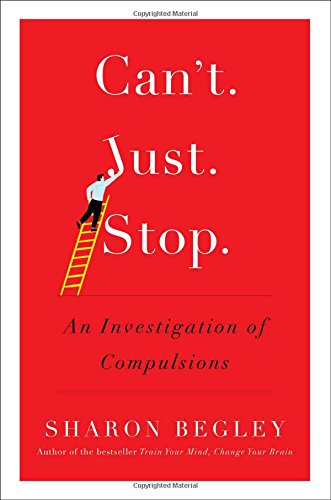
Can't Just Stop: An Investigation of Compulsions, by Sharon Begley

Can't Just Stop: An Investigation of Compulsions, by Sharon Begley


Can't Just Stop: An Investigation of Compulsions, by Sharon Begley

Free PDF Can't Just Stop: An Investigation of Compulsions, by Sharon Begley

Can't Just Stop: An Investigation Of Compulsions, By Sharon Begley. Join with us to be member below. This is the site that will certainly offer you reduce of looking book Can't Just Stop: An Investigation Of Compulsions, By Sharon Begley to read. This is not as the other website; the books will certainly be in the forms of soft file. What advantages of you to be participant of this site? Obtain hundred compilations of book connect to download and install and get consistently updated book every day. As one of guides we will provide to you now is the Can't Just Stop: An Investigation Of Compulsions, By Sharon Begley that has an extremely completely satisfied concept.

Well, book Can't Just Stop: An Investigation Of Compulsions, By Sharon Begley will certainly make you closer to exactly what you are willing. This Can't Just Stop: An Investigation Of Compulsions, By Sharon Begley will certainly be constantly buddy whenever. You might not forcedly to always finish over reviewing a book in short time. It will be just when you have spare time and also spending few time to make you really feel enjoyment with what you check out. So, you could obtain the definition of the notification from each sentence in guide.

Do you recognize why you need to review this site and what the connection to reading publication Can't Just Stop: An Investigation Of Compulsions, By Sharon Begley In this modern era, there are several means to obtain guide and they will be a lot easier to do. One of them is by obtaining the publication Can't Just Stop: An Investigation Of Compulsions, By Sharon Begley by on the internet as what we tell in the link download. The book Can't Just Stop: An Investigation Of Compulsions, By Sharon Begley could be an option because it is so proper to your requirement now. To get the e-book on the internet is quite simple by simply downloading them. With this possibility, you can read guide wherever and whenever you are. When taking a train, waiting for checklist, and also waiting for someone or various other, you could review this on-line publication Can't Just Stop: An Investigation Of Compulsions, By Sharon Begley as a buddy once again.

Yeah, checking out an e-book Can't Just Stop: An Investigation Of Compulsions, By Sharon Begley could add your good friends listings. This is one of the formulas for you to be successful. As known, success does not mean that you have excellent things. Comprehending as well as recognizing greater than other will certainly offer each success. Next to, the message and impression of this Can't Just Stop: An Investigation Of Compulsions, By Sharon Begley can be taken and chosen to act.

Can't Just Stop: An Investigation of Compulsions, by Sharon Begley

The first book to examine the science behind both mild and extreme compulsive behavior—using fascinating case studies to understand its deeper meaning and reveal the truth about human compulsion.

Whether shopping with military precision or hanging the tea towels just so, compulsion is something most of us have witnessed in daily life. But compulsions exist along a broad continuum, and at the opposite end of these mild forms exist life altering disorders.

Sharon Begley’s meticulously researched book is the first of its kind to examine all of these behaviors—mild and extreme (OCD, hoarding, acquiring, exercise, even compulsions to do good)—together, as they should be, because while forms of compulsion may look incredibly different, these are actually all coping responses to varying degrees of anxiety.

With a focus on personal stories of dozens of interviewees, Begley employs genuine compassion and gives meaningful context to their plight. Along the way she explores the role of compulsion in our fast paced culture, the brain science behind it, and strange manifestations of the behavior throughout history.

Can’t Just Stop makes compulsion comprehensible and accessible, exploring how we can realistically grapple with it in ourselves and those we love.

  • Sales Rank: #52449 in Books
  • Brand: SIMON SCHUSTER
  • Published on: 2017-02-07
  • Released on: 2017-02-07
  • Original language: English
  • Dimensions: 9.00" h x 1.00" w x 6.00" l, .0 pounds
  • Binding: Hardcover
  • 304 pages
Features
  • SIMON SCHUSTER

Review
"Begley, a senior writer at The Boston Globe’s life sciences publication Stat, is among the best there is at translating complex science for a general audience. On the whole, Can’t Just Stop is fast-paced and engaging without being simplistic, and Begley shows admirable restraint in eschewing news-you-can-use prescriptions for how to improve your productivity or otherwise better your life."
—The New York Times Book Review

"A fascinating read about human behavior and how it can go haywire."
—The Charlotte Observer

"In this fascinating read, Begley combines a personal topic with thoughtfulness and sensitivity. Recommended for anyone interested in learning more about compulsive behavior."
—Library Journal

"Begley's final chapter on brain function in the compulsive mind contains fresh insight that could fundamentally alter how we think of, and treat, mental illness going forward."
—Publishers Weekly

"[Begley's] captivating, accessible anecdotes of individual cases lead to unforgettable scenarios."
—Kirkus

"Sharon Begley has done us all a service, writing about compulsion without writing about disease and offering a new perspective on a phenomenon that is common if not universal. People troubled by their own compulsive behavior will appreciate her nuanced and balanced approach and perhaps come away with a new understanding of themselves."
—Gary Greenberg, THE BOOK OF WOE: The DSM and the Unmaking of Psychiatry

"Sharon Begley is the liveliest science writer around. Can't Just Stop offers both a state-of-the-science look at compulsions (and who doesn't have some?) and a delightful read."
—Daniel Goleman, EMOTIONAL INTELLIGENCE: Why It Can Matter More Than IQ

"Filled with emotionally resonant stories, Can't Just Stop helps us understand not only the underpinnings of some forms of mental illness, but also the everyday worries that drive so much of our behavior. A fascinating peek into the human mind in our age of anxiety."
—David Kessler, author of CAPTURE: Unraveling the Mystery of Mental Suffering

"At once fascinating and compassionate, funny and informative, this volume should be on the bookshelf of every psychiatrist, and on the nightstand of anyone who enjoys absorbing and incisive writing."
—Joel Gold, M.D., author of SUSPICIOUS MINDS: How Culture Shapes Madness

About the Author
Sharon Begley is the senior science writer at STAT, the life sciences publication of The Boston Globe. She previously worked at Reuters, Newsweek, The Daily Beast, and The Wall Street Journal. She is the author of Can’t Just Stop; The Emotional Life of Your Brain (with Richard J. Davidson); Train Your Mind, Change Your Brain; and The Mind and the Brain (with Jeffrey Schwartz). She has received numerous awards for communicating science to the public.

Excerpt. © Reprinted by permission. All rights reserved.
Can’t Just Stop CHAPTER ONE What Is a Compulsion?
A GENERATION OR SO AGO, it became trendy to describe all sorts of excessive behaviors as addictions, meaning an intense appetite for an activity, as in “I’m addicted to shopping” . . . or to weaving, yoga, jogging, work, meditating, making money (as a 1980 book called Wealth Addiction argued) or even to playing Rubik’s Cube (a 1981 story in the New York Times deemed it “an addictive invention”). Once neurobiologists discovered that the same brain circuitry underlying addictions to nicotine, opiates, and other substances is also involved in, for instance, a chocoholic’s craving for Teuscher truffles, pop sociologists were off to the races. Suddenly, we were all addicted to email and working and Angry Birds playing and Facebook posting and . . . well, everything that some people do in excess became an addiction. The only significant scientific barrier to this trend—psychiatry did not recognize any behavior as addictive in the formal sense of the term—fell in 2013. That spring, the American Psychiatric Association published the latest edition of its Diagnostic and Statistical Manual of Mental Disorders, widely regarded as the bible of the field, and for the first time it recognized a behavioral addiction: gambling.

Gambling made the cut because it met the three criteria that, for decades, have been the defining characteristics of an addiction. First, the behavior (or substance) is intensely pleasurable, at least initially, and sinks its claws into soon-to-be addicts the first time they experience it. Second, engaging in the addictive behavior produces tolerance, in which an addict needs more and more of something to derive the same hedonic hit. And, finally, ceasing to engage in the addictive behavior triggers agonizing withdrawal symptoms on a par with those that torture the addict who is trying to kick a heroin habit.

By these criteria, “addictions” to the electronic crack of the twenty-first century don’t look like addictions, and they don’t feel like it either, most crucially because they lack the defining hedonic quality. For me, at least, compulsively checking for emails feels more like what people with obsessive-compulsive disorder experience right before the urge to wash their hands or straighten a picture or step on the magical fourth sidewalk crack (because if they don’t their mother will die). It feels like something you have to do, not something you want to do; something that alleviates anxiety (Is an elusive source finally getting back to me, but about to try a competitor unless I reply in the next five seconds?), rarely something that brings pleasure.

They are compulsions, not addictions.

What’s the difference? The two terms are often used interchangeably in casual conversation (“compulsive shopping” vs. a “shopping addiction”) with a mention of “impulsive” often thrown in for good measure. But since this is a book about compulsions and not addictions, let me explain how experts understand the differences.

To wit: surprisingly, alarmingly, disappointingly, exasperatingly poorly.
A Taxonomic Odyssey
Without ratting out people who were kind enough to sit still for my persistent questioning, I’ll simply note that they did not fill me with confidence about the solidity of the scientific foundation underpinning the understanding of compulsive behaviors. “Well, a behavioral addiction is governed by things like neurons and hormones,” one tentatively began. “But a compulsive behavior is psychological, but is governed by physical mechanisms.” Huh? The muddle was captured nicely, if inadvertently, by a 2008 paper in which the authors invent something they name “impulsive-compulsive sexual behavior” and define it as “one type of addictive behavior.” Trifecta: a behavior that’s impulsive, compulsive, and addictive.

The lines dividing a compulsive behavior from an addictive one from an impulsive one seem to shift like tastes in fashion, and the confusion between and among them was practically codified by the many iterations of the American Psychiatric Association and its Diagnostic and Statistical Manual. Over the decades, the editions of the mega-selling DSM have rotated addiction, compulsion, and impulse through the definitions of syndromes, including eating disorders and anxiety disorders, as if the three were interchangeable. The DSM hasn’t even managed to draw clear boundaries around OCD, which you’d think would be firmly ensconced as a compulsive disorder by virtue of its name, if nothing else. But no: early editions of the DSM described obsessive-compulsive disorder as marked by recurrent and persistent impulses to do this or that. When the APA’s experts began working on what would become the DSM-5, their working names for pathological Internet use and pathological shopping were “C-I Internet usage” and “C-I shopping”—where the C stood for compulsive and the I for impulsive. The idea was that the excessive behaviors have features of both: impulsivity is the proximate cause, but a compulsive drive makes the behavior persist.

To get a sense of how muddled the taxonomy was, consider trichotillomania, which afflicted Amy, whom you met in the Introduction. In 1987 it entered that year’s DSM (edition III-R) as an impulse-control disorder, along with kleptomania, pyromania, and intermittent explosive disorder, among others. That reflected the common meaning of impulsivity as “rapid, unplanned behavior with little foresight of or regard for the negative consequences,” as Yale University psychiatrist Marc Potenza defined it one day when I visited his office in downtown New Haven, Connecticut. But the 1994 edition, DSM-IV, added two criteria for diagnosing trichotillomania: “an increasing sense of tension immediately before pulling out the hair or when attempting to resist the behavior,” and “pleasure, gratification, or relief when pulling out the hair.” Both of these are exactly what defines a compulsion. Yet trichotillomania sat among the impulse-control disorders until 2013, when the DSM-5 (it switched that year from Roman numerals to Arabic) plucked it out of the impulse-control disorders and stuck it at the end of the chapter on OCD as a “related disorder.” Oh, and the DSM-5 eliminated the criteria that hair pulling be preceded by tension and lead to relief—and yet there it sits, in the OCD chapter, a chapter for a disorder whose defining characteristic is the anxiety that spurs an action that relieves said anxiety.

Tric’s wanderings in the psychiatric wilderness are nothing compared to those of pathological gambling. The 1994 DSM had put compulsive gambling (my emphasis) in a grab-bag category called “impulse-control disorders not elsewhere classified,” along with kleptomania, pyromania, and others. Again, that reflected the thinking that someone might impulsively decide to play the ponies and then, through some poorly understood mechanism, segue into doing so compulsively. In 2013, gambling also pulled off the trifecta: having previously been called compulsive and classified as impulsive, it became the first behavioral disorder to be formally categorized as an addiction.

At least the new classification made sense, in that it hewed to the traditional three-part understanding of addiction (initial hedonic hit leading to intense desire for the substance or, now, the experience; tolerance; withdrawal) in the context of drugs. For starters, pathological gamblers experience cravings as powerful as a junkie’s. While it’s obviously tricky to quantify a subjective experience like craving, there is some empirical evidence that the brain mechanisms underlying an addiction to gambling overlap with those in an addiction to alcohol, nicotine, pain pills, or illegal drugs: when pathological gamblers watch videos of people playing craps or roulette or another casino game, the regions of their brains’ frontal cortex and limbic system that spike with activity are nearly identical to the regions that go haywire in cocaine addicts who watch videos of people doing lines. In addition, pathological gamblers build up tolerance to gambling just as alcoholics do to booze or junkies to heroin: to get the same pleasurable rush from gambling, they have to make larger and larger bets. And finally, pathological gamblers experience psychological withdrawal when they try to quit or even taper off, again akin to what substance abusers suffer. Cravings, tolerance, withdrawal: pathological gambling qualifies as an addiction.

In part, addiction and compulsion get mixed up because both words are used in ordinary language as well as clinical terminology, said Tom Stafford, a cognitive scientist at England’s University of Sheffield who studies compulsive video-gaming. “Many people are cavalier about saying they’re addicted to sports, or to shopping, or to their iPhone,” he told me. “There isn’t a clear line between an addiction like alcohol and a behavior they are very compelled to do, but I’d rather use the term compulsion for these behaviors.”

It isn’t just casual use of the terms that causes confusion. “It’s a real scientific controversy, how and in what ways addictions are or are not like compulsive behaviors,” James Hansell, a professor and clinical psychologist at George Washington University and coauthor of a popular textbook on abnormal psychology, told me. Hansell paused, as if trying to find properly diplomatic language: “There is a primitive quality to this, trying to define what is a compulsion and what’s an addiction.”I

Indeed, many researchers feel that the understanding, not just the nomenclature, of excessive behavior “has been shifting under our feet,” as psychologist Carolyn Rodriguez of Columbia University said when I visited her office at Columbia University Medical Center. “Terms we had been using—like addiction, compulsion, and impulse control—are being looked at in a new light.” Is there any hedonic hit from executing a compulsion? Rodriguez flipped through her mental Rolodex of patients. “In talking to them, I wouldn’t say it feels good,” she answered. “It just relieves anxiety.” That relief might feel good, but it’s a different kind of good than the pleasure that giving in to an addiction brings. Executing a compulsion brings an ebbing of the tide of angst, a lifting of the cap from a shaken soda bottle about to explode. People who feel compelled have a mental itch they need to scratch, like a poison ivy of the mind. One of Rodriguez’s patients, she told me, “has intrusive thoughts about the name James. It makes him so anxious that if he ever sees it—like in the newspaper—he has to write Edward to cancel it out, and use Visine to wash away the sense that ‘James’ has contaminated his eyes.” Rodriguez paused. “These people really suffer.”

Fortunately, a growing number of experts have begun to grapple with the failure to clearly distinguish addictions from compulsions from poor impulse control, and not merely to classify behaviors correctly for the sake of tidiness. There is a practical motivation, too: if therapists aren’t sure whether the behavior that has hijacked your life is a compulsion, an addiction, or a manifestation of lousy impulse control, they’re not likely to identify the most effective therapy. The treatment for a behavioral addiction is very different from that for a compulsive behavior, which in turn is different from the treatment for an impulse-control disorder. “You do need to get it right to determine effective treatment,” Yale’s Potenza said.

What finally emerged is this three-part taxonomy:

An addiction begins with a flash of pleasure overlaid by an itch for danger; it’s fun to gamble or to drink, and it also puts you at risk (for losing your rent money, for acting like an idiot). You like how you feel when you win or when you get a buzz on. The addict-to-be takes a drag on a cigarette and finds that the nicotine hit makes him feel energized or mentally sharper. But eventually the substance or behavior ceases to bring pleasure, not only at the original levels of use but even at the extreme levels that typically characterize an addiction. Smokers lament that the forty-third cigarette of the day just isn’t as pleasurable as the third smoke used to be. What once brought the high no longer does, necessitating ever-increasing doses, in substance abuse and in a gambler’s greater bets. Despite the diminishing hedonic return on investment, so to speak, to cease engaging in the addictive behavior causes abject misery and, often, physical withdrawal pains like the shakes, irritability, or moodiness. Pleasure, tolerance, withdrawal: the Big Three of addiction.

Impulsive behaviors involve acting without planning or even thought, driven by pleasure seeking and an urge for immediate gratification. They have an element of risk seeking—Hey, I bet it would be a blast to swan dive off this cliff!—where the risk is expected to lead to a feeling of reward. Pyromania and kleptomania are classic impulsive behaviors because they’re all about seeking pleasure and excitement. As a result, impulsivity can be the first step toward a behavioral or substance addiction. Something (a stimulus) triggers a response, and the pathway from the stimulus to response does not pass through the cognitive or even the emotional brain, at least not consciously. Instead, an urge zips from your most primitive brain center to your motor cortex—Claim that wonderful sofa someone left at the curb; grab that luscious-looking cherry cheesecake from the dessert cart—without so much as a pit stop in regions that control higher-order cognitive functions (Where the heck would you put another couch? You know you’ll feel guilty if you eat that). You do it reflexively. Like addictions, impulsive behaviors “have a hedonic quality,” Jeff Szymanski, executive director of the International OCD Foundation (IOCDF), told me when we met in his hotel suite during the Foundation’s 2013 annual meeting. “ ‘I stole and got away with it,’ ‘I lit this fire and got all these cool fire trucks to show up’—very much like, ‘I gambled and won.’ It’s not about reducing anxiety.” We give in to impulses because we expect to be rewarded with a feeling of pleasure or gratification or excitement. Impulses make us grab the 500-calorie muffin when we were sure when we entered the store that all we wanted was a skinny latte. Like addictive behaviors, impulsive ones offer the allure of something pleasurable. Impulsive behaviors become impulse-control disorders when you repeatedly give in to your urges and suffer detrimental consequences.

Compulsions, in contrast to addictive and impulsive behaviors, are all about avoiding unpleasant outcomes. They are born in anxiety and remain strangers to joy. They are repetitive behaviors we engage in over and over and over again to alleviate the angst brought on by the possibility of negative consequences. But the actual behavior is often unpleasant—or at least not particularly rewarding, especially after umpteen rounds of it. At its simplest, the anxiety takes the form of the thought If I don’t do this, something terrible will happen. If I don’t check my BlackBerry constantly, I’ll miss seeing emails the millisecond they land, and will therefore not reply in time to an urgent invitation or demand from my boss, or will just feel like I don’t know what is going on. If I do not check my fiancé’s Web history, I will not know whether he is cheating. If I do not religiously organize my closets, my home will be engulfed in chaos. If I don’t shop, it will be proof that I can’t afford nice things and am headed for homelessness. If I don’t hang on to each precious object and instead bow to my family’s wishes that I shovel out the clutter, I will feel exposed and vulnerable, like my most treasured memories have been buried in a landfill.

Underlying every compulsion is the need to avoid what causes you pain or angst. “A compulsive behavior is one that’s done with the intent of decreasing an overwhelming sense of anxiety,” said Szymanski, who before becoming executive director of the foundation in 2008 treated patients at McLean Hospital’s Obsessive Compulsive Disorder Institute. Unlike addictions with their frisson of risk taking, he said, “a compulsive behavior is risk averse,” driven by the need to avoid harm and executed with the goal of reducing the anxiety triggered by the thought of that harm. I must do this to quell my fear and anxiety. The roots of compulsion lie in the brain circuit in charge of detecting threats. This circuit, receiving a message from the visual cortex that a stranger is lurking in the dark doorway up ahead on the deserted street where you’re walking alone, screams, danger, danger! “That’s anxiety,” said Szymanski. “It’s the feeling that something is not quite right and that you may be in some sort of danger. You have a crushing emotion that you would do anything to get rid of.”

Soon after interviewing Szymanski, I trekked up to the Bronx to meet Simon Rego, a psychologist at Montefiore Medical Center who specializes in OCD. “As long as the function is to relieve distress or anxiety or prevent a catastrophe that you firmly believe will otherwise happen, it’s a compulsion,” he said. “People will do a compulsion until ‘it feels right.’ Compulsions come from a sense that if I can’t do this, I’m terrified about what will happen. The relief from distress can be pleasurable, if you think that calling a halt to smacking your head against a stone wall is pleasurable, but not in the same way that an addictive behavior is pleasurable.”

Thus, a compulsive behavior is one that you engage in to squelch anxiety. That’s clearest in OCD, where a compulsion is paired with and preceded by a specific obsession, an anxiety-provoking thought that you can’t shake. You are obsessed with the thought that your hands are dirty and so you compulsively wash; you are obsessed with the thought that you left the stove on and so you keep returning home to check; you are obsessed with the belief that stepping on a sidewalk crack will bring a world of tragedy down upon your family and so you meticulously pick your way across the concrete.

The examples of the self-destructive rituals that OCD sufferers resort to in order to alleviate anxiety are legion. David, whom I visited in his Brooklyn apartment, apologized that he had not showered before I arrived. The reason, he said, was that when he showers he feels so compelled to scrub every square millimeter of his skin, and so certain he has missed a spot, that he will spend hours and hours under the pounding water, which would have made him late for our appointment. Others with a similar shower compulsion have it even worse: they use up the building’s hot water and put them at risk for hypothermia when they can’t leave the stall despite the freezing-cold water pouring onto them.

By the end of my taxonomic odyssey, I had settled on this: A compulsion differs from an addiction because the initial impetus is alleviating anxiety, not finding pleasure, and because how much you need to engage in the compulsive behavior in order to do that does not escalate, as it does with an addiction. A compulsion is a driven behavior where the emotion behind the wheel is a psychic itch, a sense of distress, even a sense of foreboding which grows worse and worse if you do not give in. “Compulsive behavior is a form of self-medication,” as James Hansell put it. “There are painful emotions being numbed or soothed or avoided by means of the compulsive behavior. There is anxiety underneath it.” The compulsive behavior keeps pain at bay. It’s a form of self-reassurance—Everything’s okay now that I’ve checked the BlackBerry in the elevator leaving my office all of fifteen seconds after I checked the email on my desktop, but boy, I feel much better. Oh, wait, maybe a new one has arrived . . . Compulsions become habit-forming because they work so well: my worries about being out of the loop by failing to read a text the instant it lands melt away when I check compulsively. So I’ll just keep doing it.
Complications Ensue
Just when I thought I had it all sorted out, Scott Caplan, a psychologist at the University of Delaware who studies excessive online gaming and Internet use, warned me, “Remember, ‘addiction’ and ‘compulsion’ are just words that people came up with. They may not track nature perfectly.”

Among the imperfections: an addiction can become a compulsion in the sense I’m using it. Over time, a behavioral addiction that began with thrill and pleasure seeking, driven by an overpowering desire for risk and reward, can segue into being all about assuaging the anxiety, agitation, and overall misery that come from tolerance and withdrawal. The addict uses the substance or engages in the behavior compulsively even though the reward waiting at the end of the rainbow is pleasurable only in the sense that when you stop hitting yourself over the head with a hammer it feels pleasurable. Deep into an addiction, said psychologist Nicole Prause of the University of California, Los Angeles, “a reward state changes into an aversive, craving state, and you begin to take a substance or engage in a behavior to decrease negative affect. You don’t want to do it, but you have to in order to get yourself back to baseline, emotionally and psychologically.” What had been an addiction morphs into a compulsion.

Another wrench thrown into this neat taxonomy is that the same behavior can be a compulsion for one person, an impulse-control disorder for another, and a behavioral addiction for a third. One over-shopper hits the mall because of a failure of impulse control: she can’t keep herself from steering into the parking lot while driving home, can’t keep from “just checking to see if there’s anything good on sale,” and can’t keep from buying. Again. But for other over-shoppers the behavior is a compulsion: if they are not engaging in it, their anxiety rises to an intolerable level, and engaging in it assuages that anxiety.

Compulsive exercising illustrates the difficulty of trying to fit complicated, messy human behaviors into neat pigeon holes. When research on excessive exercise took off in the 1970s, about the time the jogging craze spread across the United States, scientists struggled to define what, exactly, they were studying. To some, the phenomenon of exercising to excess was “exercise addiction.” To others it was “obligatory exercise,” “compulsive exercise,” or even a noble-sounding “commitment” to exercising arising from a competitive drive, a devotion to fitness, or the love of a challenge.II

The terminological mishmash underlined the fact that scientists did not know whether they were dealing with an addiction (motivated by pleasure) or a compulsion (driven by an anxiety that only exercising could quell) or something else. A 2002 review of eighty-eight studies on excessive exercise, published over the previous twenty-nine years, found that the research had been hampered by “inconsistent or nonexistent control groups, discrepant operational criteria for exercise dependence, and/or invalidated or inappropriate measures of exercise dependence,” as researchers at the University of Florida concluded in Psychology of Sport and Exercise. In other words, attempts to study extreme exercising were so lacking in methodological rigor they were practically junk science.

But the problematic studies, in asking people to articulate why they exercised, did offer at least a glimmer of an empirically based taxonomy. People may punish their body through exercise for all sorts of complicated psychological reasons, research has shown. Some are motivated by the need to feel they are in control of at least part of their destiny, namely, their fitness and physiology. Others are driven by a need to demonstrate they can rise above common physical needs (“rest is for the weak”) or that willpower can vanquish baser desires (to self-indulgently laze around). Still others, who take up exercise to improve their fitness, are driven to ever-longer and more frequent bouts of running or using a treadmill because it brings them pleasure—the hedonic-hit model of addiction. Others exercise for extrinsic rewards such as medals and the admiration of others. In none of these cases, however, do the extreme exercisers feel like their brain is about to explode if they can’t exercise.

In contrast, compulsive exercisers tend to exercise for intrinsic, mood-altering or -stabilizing reasons. They view exercise as the focus of their lives. It is the only way to relieve unbearable anxiety, and they suffer that anxiety if unable to exercise. They might have once been motivated by the pull of fitness, but eventually they do not so much enjoy exercise as find it the only way to quell the angst they feel when they are not exercising. “We know people have various motives for starting to exercise,” said Danielle Symons Downs, a kinesiologist at Pennsylvania State University who developed an exercise dependence scale so therapists and individuals can assess whether the exercise is excessive. “And there are multiple reasons” why people do it to excess; “doing it to avoid intolerable anxiety is plausible.” These are our compulsives, people like Carrie Arnold.

Granted, the boundaries between addiction and compulsion can be fuzzy, since being deprived of an activity you deeply enjoy and want can trigger anxiety, too. But an addiction is born in joy and pleasure, a compulsion in anxiety. Compulsive exercisers experience “higher levels of anxiety when not running compared to non-obligatory runners,” as the 2002 review put it. They feel antsy or worse if they miss a workout. The purpose, as is definitionally true of any compulsion, is “alleviating negative emotions,” researchers led by Caroline Meyer of England’s Loughborough University wrote in a 2011 study in the International Journal of Eating Disorders. “A key feature of compulsive exercise is a negative mood, such as experiencing feelings of anxiety, depression, and guilt when deprived of exercising.”

Where does that come from? The psychological and personality traits that put someone at risk of “developing a compulsivity towards exercise,” as Meyer put it, include perfectionism and other elements of obsessive-compulsive personality disorder. In particular, compulsive exercisers tend to express much greater concerns over mistakes than other people do, have sky-high personal standards of achievement and morality, and feel chronic doubts about their actions—all reminiscent of the extreme conscientiousness that characterize mild compulsions.III

“Perfectionism was among the best predictors of compulsive exercise,” Meyer reported. The inevitable falling short of perfection provokes anxiety, which only exercise can quiet—and the result is a compulsion to work out to a self-destructive extreme.

*  *  *

To a man with a hammer, everything looks like a nail; to a reporter immersed in the science and phenomenology of compulsions, everything we do seems driven by anxiety, and every quirky extreme of behavior seems compulsive. In reporting the prevalences of the various forms of compulsion, I used the most credible numbers I could find, usually from a source such as the National Institute of Mental Health. But the recent surge in diagnoses of mental illness might not be what it seems. For one thing, psychiatrists and others have been relentless in spreading the message that we have a vast, underdiagnosed epidemic of mental illness. As a result, millions of people have taken it to heart, convinced they have a mental disorder and seeking professional confirmation of that. A loosening of diagnostic criteria is likely also fueling the reported rise in the incidence of mental disorders: over the years psychiatrists have decreed that you have to feel a certain way or experience certain symptoms for only three months instead of six, or have six symptoms rather than nine, to qualify for a formal diagnosis. The “epidemics” that the mental health industry cites reflect “changing diagnostic fashions,” psychiatrist Allen Frances, who chaired the DSM-IV task force, told me. “It’s not that more people are mentally ill, but that what counts as a mental illness changes.” Remember, too, that there are no brain scans, blood tests, or other objective biomarkers for mental disorders. Rather, to make a diagnosis, psychiatry and psychology rely almost entirely on patients’ self-report of how they are feeling. It isn’t hard to meet criteria for one or another DSM diagnosis, especially because the experts who devise the criteria worry more about missing cases than about diagnosing as “mentally ill” people who are not. To a certain extent, it seems, we’re as mentally ill as we think we are.

In speaking to people in the grip of extreme compulsions, I often felt as if I was looking into suns so bright they overwhelmed the planets and the stars. Even after I understood that compulsive behaviors so extreme as to derail lives, loves, and careers stemmed from a desperate need to keep anxiety at bay, it was hard to see that these were just the hypertrophied versions of ordinary, everyday quirks; they were too jarring, too off-putting. But just as the dimmer celestial denizens invisibly populate the daytime sky as well as the night’s, so less extreme versions of compulsive behaviors are all around us . . . and, if we look carefully enough, within us. So much of what we do, for good or ill, arises from the same spring as compulsions. By seeing our and others’ behaviors through that prism, what had seemed inexplicable becomes understandable. And what I came to understand above all is that compulsive behavior is not necessarily a mental disorder. Some forms of it can be, and people in its clutches deserve to be diagnosed and helped. But many, many compulsions are expressions of psychological needs as common within humankind as to feel at peace and in control, to feel connected and to matter. And if those are mental illnesses, then we’re all crazy.

I. Soon after we spoke, Hansell died suddenly in 2013 at age fifty-seven.

II. By whatever name, excessive exercising is not as prevalent as one might think from the gyms full of people taking spin classes or sweating on ellipticals. Even among the physically active, the population from whom studies typically seek volunteers, the prevalence of excessive exercise is around 3 percent.

III. Mild compulsions are typical of obsessive-compulsive personality disorder, which itself is often driven by perfectionism, as I describe in Chapter 2.

Most helpful customer reviews

3 of 4 people found the following review helpful.
Can't Just Stop reading Can't Just Stop
By Kate Cohen-Posey
Persons of my age generally do not have compulsions to check email or FB. But we do (at least I do) compulsively always have a book on hand in the event of being bored due to a few spare moments with nothing to do. Therefore, I had a near panic attack today when facing a 3 hour car trip, unable to find my copy of CAN'T JUST STOP. (Persons of my age also often misplace things.) Fortunately, the book was found so I could finish it and write a review. I am delighted that Sharon Begley is now writing solo, instead of co-authoring with neuroscientists, allowing her to unleash her formidable writing flair.
With 40 years of clinical experience, OCD is my presenting problem of choice. Yet I garnered new information from Begley's book: the more bizarre the OCD ritual, the more easily a person will recognize it as OCD; the rational for making hoarding a disorder in its own right instead of a symptom of OCD or OCPD; and more. Finally, Begley addresses the Neuroscience of OCD in clear, easy-to-understand terms. She explains outright that the caudate is hyperactive (I was never sure if it was hypo or hyper) and because it is in “over-drive” it inhibits activity in a structure that regulates the thalamus. Paradoxically, the thalamus becomes energized like grand central station at rush hour, making the vicious cycle of the orbital frontal cortex and anterior cingulate being bombarded with traffic. I realize I am indulging brain nerd-ism, but I want to emphasize that this is a delightful book for non-professionals who want to gain a better understanding of their quirks, for professional geeks like myself with an obsessive need to know, and for lovers of diction and literature.

0 of 0 people found the following review helpful.
Knowledge dispelling a behavior shrouded in distortions.
By David Kloak
Love the book. It tells the right story about the impact of the compulsive behavior on many individuals while providing a concise way of seeing the condition without stigmatizing the person. As always, Sharon opens the mind to a deeper perspective.

1 of 2 people found the following review helpful.
Five Stars
By john canada
A fascinating book, received promptly.

See all 14 customer reviews...

Can't Just Stop: An Investigation of Compulsions, by Sharon Begley PDF
Can't Just Stop: An Investigation of Compulsions, by Sharon Begley EPub
Can't Just Stop: An Investigation of Compulsions, by Sharon Begley Doc
Can't Just Stop: An Investigation of Compulsions, by Sharon Begley iBooks
Can't Just Stop: An Investigation of Compulsions, by Sharon Begley rtf
Can't Just Stop: An Investigation of Compulsions, by Sharon Begley Mobipocket
Can't Just Stop: An Investigation of Compulsions, by Sharon Begley Kindle

Can't Just Stop: An Investigation of Compulsions, by Sharon Begley PDF

Can't Just Stop: An Investigation of Compulsions, by Sharon Begley PDF

Can't Just Stop: An Investigation of Compulsions, by Sharon Begley PDF

Jumat, 26 November 2010

[G385.Ebook] Download , by John Siegenthaler Modern Hydronic Heating: For Residential and Light Commercial Buildings (3rd Edition)From Cengage Learning

Download , by John Siegenthaler Modern Hydronic Heating: For Residential and Light Commercial Buildings (3rd Edition)From Cengage Learning

The here and now book , By John Siegenthaler Modern Hydronic Heating: For Residential And Light Commercial Buildings (3rd Edition)From Cengage Learning we offer right here is not kind of common book. You know, checking out currently does not indicate to manage the published book , By John Siegenthaler Modern Hydronic Heating: For Residential And Light Commercial Buildings (3rd Edition)From Cengage Learning in your hand. You can get the soft data of , By John Siegenthaler Modern Hydronic Heating: For Residential And Light Commercial Buildings (3rd Edition)From Cengage Learning in your gizmo. Well, we suggest that the book that we proffer is the soft data of guide , By John Siegenthaler Modern Hydronic Heating: For Residential And Light Commercial Buildings (3rd Edition)From Cengage Learning The content and all things are exact same. The distinction is only the types of the book , By John Siegenthaler Modern Hydronic Heating: For Residential And Light Commercial Buildings (3rd Edition)From Cengage Learning, whereas, this condition will exactly pay.

, by John Siegenthaler Modern Hydronic Heating: For Residential and Light Commercial Buildings (3rd Edition)From Cengage Learning

, by John Siegenthaler Modern Hydronic Heating: For Residential and Light Commercial Buildings (3rd Edition)From Cengage Learning


, by John Siegenthaler Modern Hydronic Heating: For Residential and Light Commercial Buildings (3rd Edition)From Cengage Learning

Download , by John Siegenthaler Modern Hydronic Heating: For Residential and Light Commercial Buildings (3rd Edition)From Cengage Learning

, By John Siegenthaler Modern Hydronic Heating: For Residential And Light Commercial Buildings (3rd Edition)From Cengage Learning. Bargaining with reading routine is no need. Reviewing , By John Siegenthaler Modern Hydronic Heating: For Residential And Light Commercial Buildings (3rd Edition)From Cengage Learning is not kind of something marketed that you could take or otherwise. It is a thing that will certainly alter your life to life much better. It is the thing that will provide you lots of things worldwide as well as this universe, in the real world and also right here after. As exactly what will certainly be given by this , By John Siegenthaler Modern Hydronic Heating: For Residential And Light Commercial Buildings (3rd Edition)From Cengage Learning, just how can you negotiate with the thing that has lots of advantages for you?

It is not secret when connecting the writing abilities to reading. Reading , By John Siegenthaler Modern Hydronic Heating: For Residential And Light Commercial Buildings (3rd Edition)From Cengage Learning will certainly make you get even more resources and also sources. It is a manner in which could improve exactly how you forget and comprehend the life. By reading this , By John Siegenthaler Modern Hydronic Heating: For Residential And Light Commercial Buildings (3rd Edition)From Cengage Learning, you can more than just what you obtain from other publication , By John Siegenthaler Modern Hydronic Heating: For Residential And Light Commercial Buildings (3rd Edition)From Cengage Learning This is a popular book that is published from renowned publisher. Seen type the author, it can be trusted that this book , By John Siegenthaler Modern Hydronic Heating: For Residential And Light Commercial Buildings (3rd Edition)From Cengage Learning will certainly provide many motivations, about the life as well as encounter and also everything inside.

You might not have to be uncertainty about this , By John Siegenthaler Modern Hydronic Heating: For Residential And Light Commercial Buildings (3rd Edition)From Cengage Learning It is not difficult means to obtain this publication , By John Siegenthaler Modern Hydronic Heating: For Residential And Light Commercial Buildings (3rd Edition)From Cengage Learning You can just visit the distinguished with the link that we provide. Below, you could purchase guide , By John Siegenthaler Modern Hydronic Heating: For Residential And Light Commercial Buildings (3rd Edition)From Cengage Learning by online. By downloading , By John Siegenthaler Modern Hydronic Heating: For Residential And Light Commercial Buildings (3rd Edition)From Cengage Learning, you can find the soft data of this book. This is the local time for you to start reading. Even this is not published book , By John Siegenthaler Modern Hydronic Heating: For Residential And Light Commercial Buildings (3rd Edition)From Cengage Learning; it will specifically provide more benefits. Why? You might not bring the published publication , By John Siegenthaler Modern Hydronic Heating: For Residential And Light Commercial Buildings (3rd Edition)From Cengage Learning or only pile guide in your residence or the workplace.

You could finely include the soft data , By John Siegenthaler Modern Hydronic Heating: For Residential And Light Commercial Buildings (3rd Edition)From Cengage Learning to the gadget or every computer unit in your office or residence. It will certainly assist you to always proceed reviewing , By John Siegenthaler Modern Hydronic Heating: For Residential And Light Commercial Buildings (3rd Edition)From Cengage Learning every time you have extra time. This is why, reading this , By John Siegenthaler Modern Hydronic Heating: For Residential And Light Commercial Buildings (3rd Edition)From Cengage Learning does not offer you troubles. It will certainly offer you crucial sources for you that want to start composing, blogging about the comparable book , By John Siegenthaler Modern Hydronic Heating: For Residential And Light Commercial Buildings (3rd Edition)From Cengage Learning are different publication industry.

, by John Siegenthaler Modern Hydronic Heating: For Residential and Light Commercial Buildings (3rd Edition)From Cengage Learning

  • Sales Rank: #3107306 in Books
  • Published on: 2011-02-10
  • Binding: Hardcover

Most helpful customer reviews

See all customer reviews...

, by John Siegenthaler Modern Hydronic Heating: For Residential and Light Commercial Buildings (3rd Edition)From Cengage Learning PDF
, by John Siegenthaler Modern Hydronic Heating: For Residential and Light Commercial Buildings (3rd Edition)From Cengage Learning EPub
, by John Siegenthaler Modern Hydronic Heating: For Residential and Light Commercial Buildings (3rd Edition)From Cengage Learning Doc
, by John Siegenthaler Modern Hydronic Heating: For Residential and Light Commercial Buildings (3rd Edition)From Cengage Learning iBooks
, by John Siegenthaler Modern Hydronic Heating: For Residential and Light Commercial Buildings (3rd Edition)From Cengage Learning rtf
, by John Siegenthaler Modern Hydronic Heating: For Residential and Light Commercial Buildings (3rd Edition)From Cengage Learning Mobipocket
, by John Siegenthaler Modern Hydronic Heating: For Residential and Light Commercial Buildings (3rd Edition)From Cengage Learning Kindle

, by John Siegenthaler Modern Hydronic Heating: For Residential and Light Commercial Buildings (3rd Edition)From Cengage Learning PDF

, by John Siegenthaler Modern Hydronic Heating: For Residential and Light Commercial Buildings (3rd Edition)From Cengage Learning PDF

, by John Siegenthaler Modern Hydronic Heating: For Residential and Light Commercial Buildings (3rd Edition)From Cengage Learning PDF

Jumat, 19 November 2010

[S135.Ebook] Free PDF How to Draw Poses in Fashion, by Cristina Paredes

Free PDF How to Draw Poses in Fashion, by Cristina Paredes

How To Draw Poses In Fashion, By Cristina Paredes. Bargaining with reading behavior is no demand. Checking out How To Draw Poses In Fashion, By Cristina Paredes is not kind of something offered that you can take or not. It is a thing that will certainly alter your life to life a lot better. It is the thing that will offer you numerous things worldwide as well as this cosmos, in the real life and also below after. As exactly what will certainly be provided by this How To Draw Poses In Fashion, By Cristina Paredes, just how can you bargain with the important things that has many perks for you?

How to Draw Poses in Fashion, by Cristina Paredes

How to Draw Poses in Fashion, by Cristina Paredes


How to Draw Poses in Fashion, by Cristina Paredes

Free PDF How to Draw Poses in Fashion, by Cristina Paredes

Book fans, when you require a brand-new book to review, locate the book How To Draw Poses In Fashion, By Cristina Paredes below. Never worry not to find just what you require. Is the How To Draw Poses In Fashion, By Cristina Paredes your needed book now? That's true; you are actually a great visitor. This is a perfect book How To Draw Poses In Fashion, By Cristina Paredes that comes from fantastic writer to share with you. Guide How To Draw Poses In Fashion, By Cristina Paredes provides the best encounter and also lesson to take, not only take, but also discover.

For everybody, if you intend to begin accompanying others to review a book, this How To Draw Poses In Fashion, By Cristina Paredes is much suggested. As well as you need to obtain guide How To Draw Poses In Fashion, By Cristina Paredes below, in the link download that we supply. Why should be below? If you want other kind of publications, you will certainly constantly locate them and also How To Draw Poses In Fashion, By Cristina Paredes Economics, national politics, social, sciences, religions, Fictions, as well as a lot more books are supplied. These offered books are in the soft files.

Why should soft file? As this How To Draw Poses In Fashion, By Cristina Paredes, lots of people also will have to get guide quicker. However, occasionally it's so far method to get guide How To Draw Poses In Fashion, By Cristina Paredes, also in various other country or city. So, to reduce you in discovering guides How To Draw Poses In Fashion, By Cristina Paredes that will certainly sustain you, we help you by providing the listings. It's not just the list. We will certainly provide the suggested book How To Draw Poses In Fashion, By Cristina Paredes web link that can be downloaded straight. So, it will certainly not require more times or even days to present it and also other publications.

Accumulate the book How To Draw Poses In Fashion, By Cristina Paredes start from currently. However the brand-new means is by accumulating the soft documents of the book How To Draw Poses In Fashion, By Cristina Paredes Taking the soft data can be saved or stored in computer system or in your laptop computer. So, it can be greater than a book How To Draw Poses In Fashion, By Cristina Paredes that you have. The most convenient way to disclose is that you could likewise conserve the soft file of How To Draw Poses In Fashion, By Cristina Paredes in your appropriate as well as readily available device. This problem will mean you frequently read How To Draw Poses In Fashion, By Cristina Paredes in the extra times more than chatting or gossiping. It will not make you have bad habit, but it will certainly lead you to have better practice to review book How To Draw Poses In Fashion, By Cristina Paredes.

How to Draw Poses in Fashion, by Cristina Paredes

A good study of poses helps to interpret fashion illustrations, explaining above all how an item of clothing will react to any movement. This book, ideal for designers and illustrators, includes 1,000 practical resources to perfect your technique.

  • Sales Rank: #3385721 in Books
  • Brand: Brand: booQs
  • Published on: 2011-04-26
  • Released on: 2011-04-26
  • Original language: English, French, German
  • Number of items: 1
  • Dimensions: 1.20" h x 8.70" w x 8.70" l, 2.85 pounds
  • Binding: Paperback
  • 352 pages
Features
  • Used Book in Good Condition

Most helpful customer reviews

4 of 4 people found the following review helpful.
A reference book for poses, not a drawing guide
By Parka
[[VIDEOID:mo2SUA461Y2W3W]]There's not much difference between this book and 1,000 Poses in Fashion, or Fashion Design Handbook for that matter.

The difference is only in the number of poses included in each book. This book has about 700 poses on 352 pages. The bulk are line art, and some with watercolours. As a reference book for poses, it's fantastic because of the huge number of poses. All drawn by Chidy Wayne.

It's not an instructional book since there's no guidance on how to draw. The captions merely describe the type of clothing featured. The book includes urban, casual and format style. Fashion Design Handbook has a bit on using watercolours on fashion design, not much.

If you're just getting one book, I would recommend 1000 Poses in Fashion since there are 1000 poses. Next would be this book with 700 poses. Fashion Design Handbook with around 600 poses. As far as I can tell, there doesn't seem to be any overlap of poses in these three books, which is pretty amazing -- just in case you want to get all three.

As a reference book, this would be a 5 stars.

See all 1 customer reviews...

How to Draw Poses in Fashion, by Cristina Paredes PDF
How to Draw Poses in Fashion, by Cristina Paredes EPub
How to Draw Poses in Fashion, by Cristina Paredes Doc
How to Draw Poses in Fashion, by Cristina Paredes iBooks
How to Draw Poses in Fashion, by Cristina Paredes rtf
How to Draw Poses in Fashion, by Cristina Paredes Mobipocket
How to Draw Poses in Fashion, by Cristina Paredes Kindle

How to Draw Poses in Fashion, by Cristina Paredes PDF

How to Draw Poses in Fashion, by Cristina Paredes PDF

How to Draw Poses in Fashion, by Cristina Paredes PDF

Selasa, 16 November 2010

[E778.Ebook] Download The Cheer Diet (Female Edition): A 60 Day Plan Designed To Help You Stunt Stronger, Tumble Harder & Look Absolutely Fierce At Competitions

Download The Cheer Diet (Female Edition): A 60 Day Plan Designed To Help You Stunt Stronger, Tumble Harder & Look Absolutely Fierce At Competitions

This is not around how a lot this publication The Cheer Diet (Female Edition): A 60 Day Plan Designed To Help You Stunt Stronger, Tumble Harder & Look Absolutely Fierce At Competitions costs; it is not also concerning what kind of book you actually enjoy to check out. It is regarding what you can take and also obtain from reviewing this The Cheer Diet (Female Edition): A 60 Day Plan Designed To Help You Stunt Stronger, Tumble Harder & Look Absolutely Fierce At Competitions You can favor to choose other book; but, no matter if you attempt to make this book The Cheer Diet (Female Edition): A 60 Day Plan Designed To Help You Stunt Stronger, Tumble Harder & Look Absolutely Fierce At Competitions as your reading selection. You will not regret it. This soft file publication The Cheer Diet (Female Edition): A 60 Day Plan Designed To Help You Stunt Stronger, Tumble Harder & Look Absolutely Fierce At Competitions could be your excellent friend all the same.

The Cheer Diet (Female Edition): A 60 Day Plan Designed To Help You Stunt Stronger, Tumble Harder & Look Absolutely Fierce At Competitions

The Cheer Diet (Female Edition): A 60 Day Plan Designed To Help You Stunt Stronger, Tumble Harder & Look Absolutely Fierce At Competitions


The Cheer Diet (Female Edition): A 60 Day Plan Designed To Help You Stunt Stronger, Tumble Harder & Look Absolutely Fierce At Competitions

Download The Cheer Diet (Female Edition): A 60 Day Plan Designed To Help You Stunt Stronger, Tumble Harder & Look Absolutely Fierce At Competitions

This is it guide The Cheer Diet (Female Edition): A 60 Day Plan Designed To Help You Stunt Stronger, Tumble Harder & Look Absolutely Fierce At Competitions to be best seller lately. We offer you the most effective offer by getting the magnificent book The Cheer Diet (Female Edition): A 60 Day Plan Designed To Help You Stunt Stronger, Tumble Harder & Look Absolutely Fierce At Competitions in this web site. This The Cheer Diet (Female Edition): A 60 Day Plan Designed To Help You Stunt Stronger, Tumble Harder & Look Absolutely Fierce At Competitions will not just be the type of book that is tough to find. In this website, all sorts of books are provided. You can search title by title, author by author, and also publisher by publisher to figure out the most effective book The Cheer Diet (Female Edition): A 60 Day Plan Designed To Help You Stunt Stronger, Tumble Harder & Look Absolutely Fierce At Competitions that you can check out currently.

Also the price of a publication The Cheer Diet (Female Edition): A 60 Day Plan Designed To Help You Stunt Stronger, Tumble Harder & Look Absolutely Fierce At Competitions is so inexpensive; many individuals are actually thrifty to reserve their cash to buy the books. The other factors are that they really feel bad and have no time to visit the book shop to browse guide The Cheer Diet (Female Edition): A 60 Day Plan Designed To Help You Stunt Stronger, Tumble Harder & Look Absolutely Fierce At Competitions to read. Well, this is modern-day era; so many e-books can be obtained easily. As this The Cheer Diet (Female Edition): A 60 Day Plan Designed To Help You Stunt Stronger, Tumble Harder & Look Absolutely Fierce At Competitions as well as more books, they can be obtained in quite fast ways. You will certainly not need to go outdoors to obtain this book The Cheer Diet (Female Edition): A 60 Day Plan Designed To Help You Stunt Stronger, Tumble Harder & Look Absolutely Fierce At Competitions

By visiting this page, you have done the appropriate gazing factor. This is your begin to select guide The Cheer Diet (Female Edition): A 60 Day Plan Designed To Help You Stunt Stronger, Tumble Harder & Look Absolutely Fierce At Competitions that you want. There are great deals of referred e-books to check out. When you wish to get this The Cheer Diet (Female Edition): A 60 Day Plan Designed To Help You Stunt Stronger, Tumble Harder & Look Absolutely Fierce At Competitions as your book reading, you can click the web link page to download and install The Cheer Diet (Female Edition): A 60 Day Plan Designed To Help You Stunt Stronger, Tumble Harder & Look Absolutely Fierce At Competitions In few time, you have actually possessed your referred e-books as your own.

Due to this book The Cheer Diet (Female Edition): A 60 Day Plan Designed To Help You Stunt Stronger, Tumble Harder & Look Absolutely Fierce At Competitions is marketed by online, it will certainly reduce you not to publish it. you can get the soft documents of this The Cheer Diet (Female Edition): A 60 Day Plan Designed To Help You Stunt Stronger, Tumble Harder & Look Absolutely Fierce At Competitions to save money in your computer system, gadget, and a lot more gadgets. It depends on your willingness where and also where you will read The Cheer Diet (Female Edition): A 60 Day Plan Designed To Help You Stunt Stronger, Tumble Harder & Look Absolutely Fierce At Competitions One that you should constantly remember is that reading e-book The Cheer Diet (Female Edition): A 60 Day Plan Designed To Help You Stunt Stronger, Tumble Harder & Look Absolutely Fierce At Competitions will certainly never ever end. You will have ready to review other e-book after finishing a book, as well as it's constantly.

The Cheer Diet (Female Edition): A 60 Day Plan Designed To Help You Stunt Stronger, Tumble Harder & Look Absolutely Fierce At Competitions

Going Full Out Just Got Easier! Say goodbye to feeling bloated, having low energy and getting cramps while doing the sport you love. Everything about The Cheer Diet has been designed to meet the demanding needs of today’s All-Star and Varsity athlete. Inside, you’ll learn:

  • What to eat before practice to avoid energy crashes
  • What you should be drinking during practices to keep you going for hours (Hint: it’s not Gatorade!)
  • How to prime your body to burn fat as fuel instead of sacrificing your muscles as the energy source
  • How to prepare simple, delicious and easy to cook meals that require almost no cooking skills
  • Exactly what to eat after practice so that your body goes into repair mode almost immediately!
  • And much, much more…
So while other girls are suffering by fueling their bodies with basic, low quality foods, you can give yourself the edge by being able to perform like a champion and look Instagram worthy from every angle! Free nutrition tips: www.TheCheerDiet.com Follow us on Twitter and IG: @thecheerdiet

  • Sales Rank: #112948 in Books
  • Published on: 2015-01-26
  • Original language: English
  • Number of items: 1
  • Dimensions: 8.00" h x .41" w x 5.25" l, .43 pounds
  • Binding: Paperback
  • 180 pages

About the Author
Coach Sahil Mulla has been involved in the field of performance and nutrition for well over a decade! He is the founder of Addicted To Tumbling and Hardcore Training Solutions where he consults some of the top athletes in Gymnastics, Powerlifting and MMA. He also works with regular people that just want to get in the best shape of their life (cheer moms and dads included!) To write the The Cheer Diet, Coach Sahil took his years’ worth of knowledge and experience to create a plan that is specifically designed for the hard-working athletes of this growing sport, in order to give them the edge they deserve!

Most helpful customer reviews

0 of 0 people found the following review helpful.
Five Stars
By Sheila Miller
This diet is easy to follow and common sense. The writing is clear and entertaining as well.

5 of 5 people found the following review helpful.
Something To Cheer About
By J. Power
I am the mom of a pre-teen cheerleader. When my daughter's training substantially increased in its duration and intensity, I became concerned about what she was eating. I realized that the hours of training had to be balanced with proper nutrition. I was looking for information that would be able to guide her in making the best possible choices, giving her the energy to push through those extended practices.

The Cheer Diet has exceeded our expectations! With the author’s valuable information and great writing style, we were able to obtain all the necessary information to implement some important changes to her eating habits. I have already seen an improvement in her food choices because she is now aware of the importance of proper nutrition, and how food choices both pre/post workout can have a direct and positive result on her performance.

I have read the book twice and my favorite section is the myth busters! It has answered and put to rest several questions I had often thought about, i.e. organic vs. regular food, detoxing, aspartame, and I have since made some necessary changes to my own dietary intake. My daughter loves the delicious meal options and easy to make smoothie recipes.

This book is a valuable source of information written in everyday language with lots of facts and just the right amount of fun.

5 of 5 people found the following review helpful.
A MUST-READ For All Females That Are Into Health & Fitness
By Martin Dasko
This is a must read book for anyone struggling with their diet, energy levels, and training. This is the health and fitness book that every female needs to read. Sahil covers everything from supplements to eating to even my favorite topic -- coffee!

As a cheerleader or a female there's plenty of misconceptions and myths when it comes to your body. Coach Sahil has been working with cheerleaders for over 7 years now and he's an excellent coach.

This book is like having your own personal trainer, nutritionist, and shrink all in one. You're going to know what you need to perform at you're best and what you need to avoid so that you never feel miserable again.

My favorite section has to be the student-friendly grocery list. No longer can you use money as an excuse for not making the progress that you desire!

See all 6 customer reviews...

The Cheer Diet (Female Edition): A 60 Day Plan Designed To Help You Stunt Stronger, Tumble Harder & Look Absolutely Fierce At Competitions PDF
The Cheer Diet (Female Edition): A 60 Day Plan Designed To Help You Stunt Stronger, Tumble Harder & Look Absolutely Fierce At Competitions EPub
The Cheer Diet (Female Edition): A 60 Day Plan Designed To Help You Stunt Stronger, Tumble Harder & Look Absolutely Fierce At Competitions Doc
The Cheer Diet (Female Edition): A 60 Day Plan Designed To Help You Stunt Stronger, Tumble Harder & Look Absolutely Fierce At Competitions iBooks
The Cheer Diet (Female Edition): A 60 Day Plan Designed To Help You Stunt Stronger, Tumble Harder & Look Absolutely Fierce At Competitions rtf
The Cheer Diet (Female Edition): A 60 Day Plan Designed To Help You Stunt Stronger, Tumble Harder & Look Absolutely Fierce At Competitions Mobipocket
The Cheer Diet (Female Edition): A 60 Day Plan Designed To Help You Stunt Stronger, Tumble Harder & Look Absolutely Fierce At Competitions Kindle

The Cheer Diet (Female Edition): A 60 Day Plan Designed To Help You Stunt Stronger, Tumble Harder & Look Absolutely Fierce At Competitions PDF

The Cheer Diet (Female Edition): A 60 Day Plan Designed To Help You Stunt Stronger, Tumble Harder & Look Absolutely Fierce At Competitions PDF

The Cheer Diet (Female Edition): A 60 Day Plan Designed To Help You Stunt Stronger, Tumble Harder & Look Absolutely Fierce At Competitions PDF

Senin, 15 November 2010

[J253.Ebook] PDF Download Raymond Depardon: Manicomio Secluded Madness (201)Raymond Depardon

PDF Download Raymond Depardon: Manicomio Secluded Madness (201)Raymond Depardon

Book fans, when you need a new book to review, locate guide Raymond Depardon: Manicomio Secluded Madness (201)Raymond Depardon right here. Never ever stress not to find exactly what you require. Is the Raymond Depardon: Manicomio Secluded Madness (201)Raymond Depardon your required book currently? That holds true; you are truly a good viewers. This is a perfect book Raymond Depardon: Manicomio Secluded Madness (201)Raymond Depardon that originates from great writer to show to you. Guide Raymond Depardon: Manicomio Secluded Madness (201)Raymond Depardon offers the most effective encounter and also lesson to take, not just take, but likewise find out.

Raymond Depardon: Manicomio Secluded Madness (201)Raymond Depardon

Raymond Depardon: Manicomio Secluded Madness (201)Raymond Depardon


Raymond Depardon: Manicomio Secluded Madness (201)Raymond Depardon

PDF Download Raymond Depardon: Manicomio Secluded Madness (201)Raymond Depardon

Idea in choosing the most effective book Raymond Depardon: Manicomio Secluded Madness (201)Raymond Depardon to read this day can be obtained by reading this web page. You can find the very best book Raymond Depardon: Manicomio Secluded Madness (201)Raymond Depardon that is sold in this world. Not just had the books released from this country, however also the other nations. And currently, we mean you to check out Raymond Depardon: Manicomio Secluded Madness (201)Raymond Depardon as one of the reading materials. This is just one of the most effective publications to gather in this website. Look at the page as well as look guides Raymond Depardon: Manicomio Secluded Madness (201)Raymond Depardon You could locate lots of titles of the books supplied.

Occasionally, reading Raymond Depardon: Manicomio Secluded Madness (201)Raymond Depardon is quite monotonous and also it will take very long time beginning with getting guide and also start checking out. However, in modern-day era, you can take the creating modern technology by utilizing the net. By net, you could visit this page and begin to look for the book Raymond Depardon: Manicomio Secluded Madness (201)Raymond Depardon that is required. Wondering this Raymond Depardon: Manicomio Secluded Madness (201)Raymond Depardon is the one that you need, you can choose downloading and install. Have you understood how you can get it?

After downloading the soft file of this Raymond Depardon: Manicomio Secluded Madness (201)Raymond Depardon, you can start to read it. Yeah, this is so delightful while someone should review by taking their large publications; you are in your brand-new way by just handle your device. Or perhaps you are working in the workplace; you could still use the computer to check out Raymond Depardon: Manicomio Secluded Madness (201)Raymond Depardon completely. Of course, it will certainly not obligate you to take several web pages. Simply page by page relying on the time that you need to check out Raymond Depardon: Manicomio Secluded Madness (201)Raymond Depardon

After knowing this extremely easy means to read and get this Raymond Depardon: Manicomio Secluded Madness (201)Raymond Depardon, why do not you inform to others regarding by doing this? You can tell others to see this website and also opt for browsing them preferred books Raymond Depardon: Manicomio Secluded Madness (201)Raymond Depardon As known, here are great deals of listings that offer numerous kinds of publications to collect. Simply prepare few time and web links to get guides. You can truly appreciate the life by reading Raymond Depardon: Manicomio Secluded Madness (201)Raymond Depardon in a very easy way.

Raymond Depardon: Manicomio Secluded Madness (201)Raymond Depardon

"In 1977, I met Franco Basaglia, director of the manicomio [lunatic asylum] at the hospital in Trieste, who was also the leader of an alternative psychiatric movement. Taking advantage of the chaotic political situation in Italy at the time, he started to close several psychiatric hospitals with a group of doctors, and had 'Law 180' passed in 1978, which resulted in the definitive closure of the asylums. Franco encouraged me to take photographs of this reality, 'If not, they will not believe us,' he told me. With more than a hundred thousand people interned in psychiatric asylums all over Italy, the situation was indeed dramatic. He also introduced me to directors of other asylums in Venice, Naples, Arezzo and Turin. For four years, until the closure of the hospital on the island of San Clemente very close to Venice, I photographed these places of pain to preserve them in memory and to pay tribute to Franco Basaglia--who died from a sudden illness in 1980. My film about San Clemente came out in 1982, but it's only now thirty years later--after a long pause--that I have finally edited and designed the photographic work that was begun all those years ago." --Raymond Depardon

  • Sales Rank: #2183828 in Books
  • Published on: 2014-01-15
  • Original language: English
  • Number of items: 1
  • Dimensions: .92" h x 11.73" w x 8.22" l, .0 pounds
  • Binding: Paperback
  • 208 pages

Most helpful customer reviews

0 of 0 people found the following review helpful.
Excellent coverage in a few Italian insane asylums
By Daniel D. Teoli Jr.
You probably couldn't do this book nowadays, in the US anyway, with all the privacy laws. Excellent coverage in a few Italian insane asylums. I'm glad Depardon archived it. More importantly I'm thankful that the people running the asylums had the foresight to know the importance of documenting this material. The printing is good. The book I received had a damaged cover with a bubble in it. But that has no effect on the great documentary photography inside. Depardon included his recount of the project from start to finish.

0 of 0 people found the following review helpful.
get a hardcover edition instead
By Ordine
great photos by Depardon, but for your own's sake get a hardcover version. The soft one is ugly and tones down the whole value of it.

0 of 0 people found the following review helpful.
Beautiful in it's dark truths
By M.Ax.
Superb imagery. Beautiful in it's dark truths. Madness indeed.

See all 3 customer reviews...

Raymond Depardon: Manicomio Secluded Madness (201)Raymond Depardon PDF
Raymond Depardon: Manicomio Secluded Madness (201)Raymond Depardon EPub
Raymond Depardon: Manicomio Secluded Madness (201)Raymond Depardon Doc
Raymond Depardon: Manicomio Secluded Madness (201)Raymond Depardon iBooks
Raymond Depardon: Manicomio Secluded Madness (201)Raymond Depardon rtf
Raymond Depardon: Manicomio Secluded Madness (201)Raymond Depardon Mobipocket
Raymond Depardon: Manicomio Secluded Madness (201)Raymond Depardon Kindle

Raymond Depardon: Manicomio Secluded Madness (201)Raymond Depardon PDF

Raymond Depardon: Manicomio Secluded Madness (201)Raymond Depardon PDF

Raymond Depardon: Manicomio Secluded Madness (201)Raymond Depardon PDF

Selasa, 09 November 2010

[G257.Ebook] Download Left at East Gate, by Peter Robbins

Download Left at East Gate, by Peter Robbins

Do you understand why you need to review this site and also just what the connection to reading e-book Left At East Gate, By Peter Robbins In this modern age, there are several means to acquire the e-book as well as they will be a lot easier to do. Among them is by obtaining guide Left At East Gate, By Peter Robbins by online as just what we tell in the link download. The publication Left At East Gate, By Peter Robbins could be an option since it is so proper to your necessity now. To get guide on-line is extremely simple by only downloading them. With this opportunity, you could check out guide wherever and also whenever you are. When taking a train, awaiting checklist, and awaiting somebody or various other, you could read this on-line e-book Left At East Gate, By Peter Robbins as a buddy again.

Left at East Gate, by Peter Robbins

Left at East Gate, by Peter Robbins


Left at East Gate, by Peter Robbins

Download Left at East Gate, by Peter Robbins

Checking out a book Left At East Gate, By Peter Robbins is type of very easy activity to do each time you want. Also reviewing each time you desire, this task will not disturb your other tasks; many individuals generally check out guides Left At East Gate, By Peter Robbins when they are having the downtime. Just what about you? Just what do you do when having the extra time? Don't you invest for ineffective points? This is why you have to obtain the book Left At East Gate, By Peter Robbins as well as try to have reading practice. Reviewing this e-book Left At East Gate, By Peter Robbins will not make you pointless. It will certainly provide much more advantages.

As known, adventure and also encounter concerning session, amusement, as well as knowledge can be gotten by only reading a book Left At East Gate, By Peter Robbins Also it is not straight done, you could understand even more concerning this life, concerning the globe. We offer you this appropriate as well as very easy means to acquire those all. We provide Left At East Gate, By Peter Robbins as well as lots of book collections from fictions to science at all. Among them is this Left At East Gate, By Peter Robbins that can be your companion.

Just what should you think more? Time to get this Left At East Gate, By Peter Robbins It is simple after that. You could just rest as well as stay in your area to obtain this publication Left At East Gate, By Peter Robbins Why? It is online book shop that supply numerous compilations of the referred publications. So, merely with net link, you could delight in downloading this book Left At East Gate, By Peter Robbins as well as numbers of books that are hunted for now. By visiting the web link web page download that we have actually supplied, the book Left At East Gate, By Peter Robbins that you refer so much can be located. Merely save the requested book downloaded and after that you can appreciate guide to review each time as well as area you desire.

It is very simple to check out the book Left At East Gate, By Peter Robbins in soft data in your gadget or computer. Again, why need to be so tough to obtain the book Left At East Gate, By Peter Robbins if you can choose the simpler one? This site will certainly ease you to choose as well as pick the very best cumulative books from the most ideal vendor to the released book just recently. It will certainly consistently update the compilations time to time. So, connect to internet as well as visit this site always to obtain the new book each day. Now, this Left At East Gate, By Peter Robbins is yours.

Left at East Gate, by Peter Robbins

Left at East Gate: A First-Hand Account of the Rendlesham Forest UFO Incident, Its Cover-up, and Investigation

  • Sales Rank: #832108 in eBooks
  • Published on: 2012-12-10
  • Released on: 2012-12-10
  • Format: Kindle eBook

From the Author
"Warren's firsthand account explodes with authentic detail. A riveting, fascinating, and important book." -Whitley Strieber, author of Communion "[H]as the force of a well-told mystery novel, yet it is all disturbingly true. A major contribution to the literature." -Budd Hopkins, author of Missing Time "[O]ne gripping version of the story of this classic UFO case and its aftermath." -Publisher's Weekly "This book is dynamite. Meticulously researched, gripping, provocative..." -Nick Pope, author of Open Skies, Closed Minds "[Q]uestions on these UFO sightings are still being asked in Parliament. If you read this gripping book you will see why." -Focus, journal of the British Ministry of Defence

About the Author
Peter Robbins is a consultant to the UN on trade relations between African countries and multinational companies.

Most helpful customer reviews

14 of 15 people found the following review helpful.
Best book of the bunch on Bentwaters?
By The Guardian
This book, originally published in 1997, is one of several written about the famous Rendlesham Forest/Bentwaters UFO incident in December 1980, and possibly the most interesting to read.

Repeated encounters with UFOs were reported over three nights (25-28 December) in 1980 at, over and near the twin RAF bases of Bentwaters and Woodbridge, large neighboring airfields in Suffolk leased for several decades from the UK Government by the US Government and at that time hosting USAF nuclear strike aircraft and nuclear weapons. Warren was at the time a young airman stationed at Bentwaters, and claimed to be present during the third night of encounters when an unknown craft actually landed at Capel Green and was surrounded by USAF ground personnel - incidentally off-base carrying loaded weapons, specifically against a signed agreement between the UK and US governments.

It is only fair to say that some controversy surrounds Warren and his outspoken claims, and he has been accused in recent years by some former Air Force colleagues of being "economical with the truth." In short, it's been claimed by some, like the Deputy base commander Charles Halt, that Larry wasn't on duty that night and personally witnessed nothing. Certainly his claims about being forcibly detained in an underground facility under the base and subjected to mind-indoctrination following the incident have been questioned with good cause. However, something very serious involving unidentified flying objects intruding over this nuclear-weapons holding NATO facility and "adversely affecting the ordnance", of long duration and with multiple military and civilian witnesses, did happen as reported beyond dispute. The sheer number of witnesses, the physical effects on some of the airmen (damaged retinas due to the brightness of the light in one encounter, including Larry Warren, medically certified) and the incriminating quantity of official paperwork generated between the base command and the UK government subsequent to the incident make this a certainty. Furthermore, multiple witnesses testify that some kind of formalised communication took place between "extraterrestrial biological entities" from the landed craft and senior USAF personnel, who seemed prepared for the encounter and to know exactly what to do.

The book is co-written by Warren and respected researcher Peter Robbins. Warren's narrative in the first part of the book relates his life story up to, during and after the incident and is candid about his values and motivations. He was from an early age something of an anglophile and was delighted to be posted to Bentwaters in England, where he hoped to enjoy his tour. He also reports serial family encounters with High Strangeness and sounds like a serial abductee, the understanding of which phenomenon may require a certain amount of separate study by the reader and acquaintance with the published work of Harvard Professor John Mack, researcher Budd Hopkins, Professor David Jacobs and Raymond Fowler, to name a few. This situation complicates his narrative even more, as well it might.

Robbins' authored sections of the book are printed in italics to differentiate from Warren's, which are written in normal type. The narrative tells the story of their joint investigation, all self-funded from meagre resources, through some fourteen separate visits to the UK (both the authors were US-based by this time) and the journey which led to the writing and publishing of the book. The style is pacy, interesting and engaging, and the editorial decision to tell the tale in story form succeeds in making the book something of a page-turner as the reader shares their struggles, tribulations and the excitement of discovery. It's a very enjoyable read - the type of narrative from which film scripts are made. This is not to diminish the serious content, the thoroughness and persistence of the research, nor the disturbing conclusions. Larry and Peter invested a great deal of time, effort and personal resources in pursuit of the truth of this most important event, and the first edition of the book was famously brandished in the British Parliament during a session demanding answers from the government on the defence implications of the incident.

The hardcover edition contains 16 pages of relevant monochrome photographs and an extensive index of scanned/photocopied documents in support of the truth of the incident. There is also an interesting section about the employment of Wilhelm Reich's controversial cloud-busting technology (one of Robbins' areas of specialist research knowledge) at Bentwaters by the USAF.

Interesting postscript: in September 2009 I was honored to be given a guided walking tour of Rendlesham Forest and Bentwaters (now converted for civilian use) by Peter Robbins, on a splendid late summer Sunday afternoon, including the site at Capel Green where the landed craft had left a large circular area of dessicated soil on which nothing would grow for several years and from which Peter took his soil samples for analysis in Massachusetts. The local council in Suffolk now marks the walking trails with numbered square wooden marker posts, each of which sports the small image of a bug-eyed grey alien head. Nice touch.

Of the many books written about this incident, there is in the opinion of this reviewer one other which is definitely worth reading: the late Georgina Bruni's "You Can't Tell the People" (a direct quote from then PM Margaret Thatcher talking to the author about the ET issue). If you read both books, you'll have a good all-round understanding about the Rendlesham Forest Incident. I don't want to denigrate other books on this subject, but none are as good as these two.

8 of 9 people found the following review helpful.
Stunning Story from Bentwaters Eyewitness
By John H. Macdonald
I came across this book as a result of reading Leslie Keans' terrific "UFOs...", and looking for more information on The Rendlesham Forest UFO. I hit gold with this account of not only the incident, but a decades long investigation by one of the USAF Security Patrol people who was an on the scene witness to events that are corroborated by several other participants - and challenged by others. Larry Fawcett provides a personal account of the case from his perspective as an Air Force SP, while author Peter Robbins gives a higher level perspective as one who is no stranger to the UFO phenomenon. The two accounts are woven together and it makes for a compelling read.

The account of the incident is embedded in a back story that gradually unfolds about the Bentwaters-Woodbridge NATO airbase that was the forward storage area for tactical nuclear weapons to be used in an anticipated cold war tank attack across Europe by the Soviet Union. A-10 Tankbuster aircraft and missile silos figure in the events, with weapons disabled in hardened silos by strange light beams from above. Penetration of the bases airspace by unknowns over a long weekend was a very big and disturbing question for the USAF, and the armed patrols of US Security Police into the UK countryside made this a sensitive diplomatic issue as well.

The story of this unsophisticated airman over several decades trying to sort out the truth from fiction or delusion, and the NATO related history of the bases provides ample opportunity for X-Files speculation or just plain good reading for those interested this sort of thing. As the authors become minor celebrities (or villians) in the ufo community, the reader gets some apprecdiation for the complexities not just of the phenomenon, but of the entire ufo subculture that has grown up around these incidents.

I confess to having been frustrated for a time with the narrative structure, number of characters and details, but got sucked into the fascinating background information about Bentwaters, NATO, Security Protocols, and the Cold War, and found myself reading on in spite of myself. When I finished, I felt that I had spent my time well. Recommended for those with the patience to overlook the book's structural problems and multiple narrators, and willingness to go back and forth a bit to stay on track. Great book for a long and snowy afternoon in front of the fire.

For the definitive account from a prominent journalist, Georgina Bruni, who was able to interview prominent people about the case,be sure to read You Can't Tell the People: The Definitive Account of the Rendlesham Forest UFO Mystery.

7 of 8 people found the following review helpful.
LEFT AT EAST GATE
By Joseph R. Calamia
"Left at East Gate" by Larry Warren and Peter Robbins is an extensively documented account of the UFO incident that occurred in late December of 1980 on the American airbase at Bentwaters and Woodbridge located in the Rendlesham forest.

Larry Warren was on duty and claims to have seen not just flying UFO's, and "funny-lights", but an actual landed craft with occupants. In addition he claims that he and other security personnel were ordered to surround the craft while the commanding Air force officer in charge of the detail seemed to have some type of telepathic communication with the occupants of that craft! This story and or, numerous parts of the incident were subsequently corroborated by over 20 witnesses who were somehow involved either directly or in a peripheral manner. Shortly thereafter, Warren claims he was escorted into a huge underground complex of the base and "de-briefed" by special sections of the CIA, and NSA. While in the complex, Mr. Warren also claims to have seen aliens working with and alongside Air force and Intelligence personal. In the interim, he is subsequently discharged from the service for his outspokenness, and becomes totally obsessed in his personal mission to prove that..." he really saw what he claims to have seen."
Normally, when I hear stories about the infamous Government underground secret complexes with and without alien co-workers, I can't help but have a rather "tongue and cheek" attitude about such things. However, even if, Mr. Warren was confused about his "tour" in the underground sanctuary of the Air force bases, there is a certain ring of truth regarding his UFO encounters and what followed.

Was Mr. Warren a victim of some dark sided Government experiment using psychotropic drugs, or, hallucinogenics? Did Airman Warren become a real live laboratory subject as portrayed in the 1990 movie, "Jacobs's Ladder" wherein, the Government allegedly used some experiential drug known as "BZ" (Glycolate anticholinergic) on its Vietnam troops in the field? The reader must make his/her own determination. Personally, I believe that Mr. Warren may have fallen into both arenas.

His description of the craft, the occupants, and the on-going trauma that he has experienced since that incident are without a doubt, totally and unequivocally believable.
The use of drugs and or, psychological manipulation as a "masking factor" to enhance the art of disinformation is also apparent in this case. In addition, the intense accumulation of documents, copies of tape recorded conversations, photographs, and admitted confessions of this individual's personal problems during these events and years that followed only serve to bolster his claims.

As in most high-profile UFO cases, there are always repercussions to the witnesses and or, their families. (I.e. Sgt. Lonnie Zamora case 1964). What ever Mr. Warren witnessed (and he did witness "something" of gigantic importance), his story... is worth reading! I'm truly sorry for the on-going sadness that he has endured because of this historical event, but... I am also impressed with his courageous efforts to share his experiences with the public at large.

A frighteningly good read!!!

See all 20 customer reviews...

Left at East Gate, by Peter Robbins PDF
Left at East Gate, by Peter Robbins EPub
Left at East Gate, by Peter Robbins Doc
Left at East Gate, by Peter Robbins iBooks
Left at East Gate, by Peter Robbins rtf
Left at East Gate, by Peter Robbins Mobipocket
Left at East Gate, by Peter Robbins Kindle

Left at East Gate, by Peter Robbins PDF

Left at East Gate, by Peter Robbins PDF

Left at East Gate, by Peter Robbins PDF